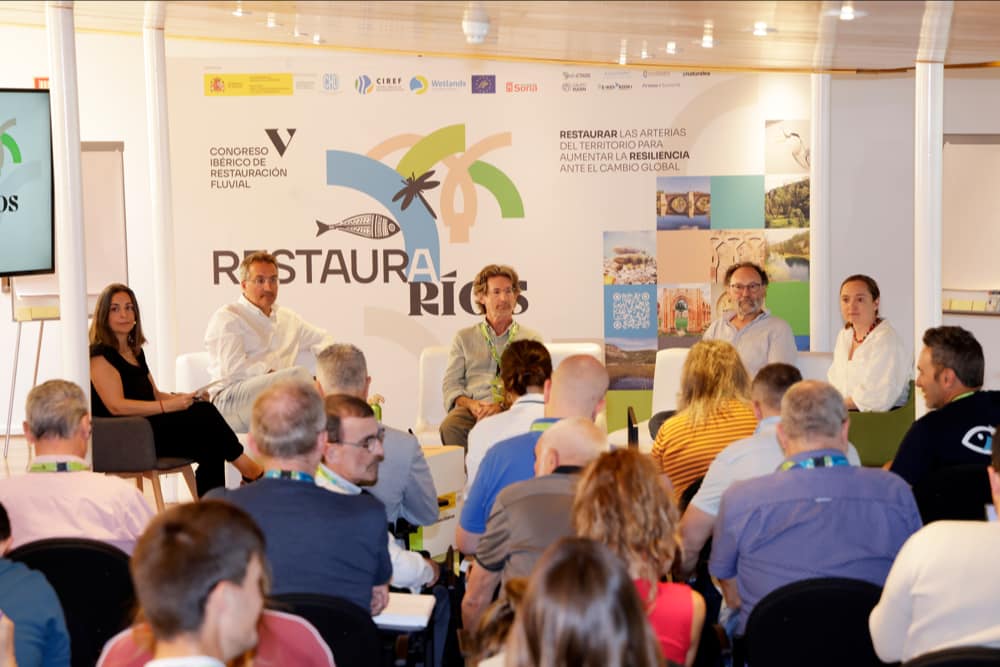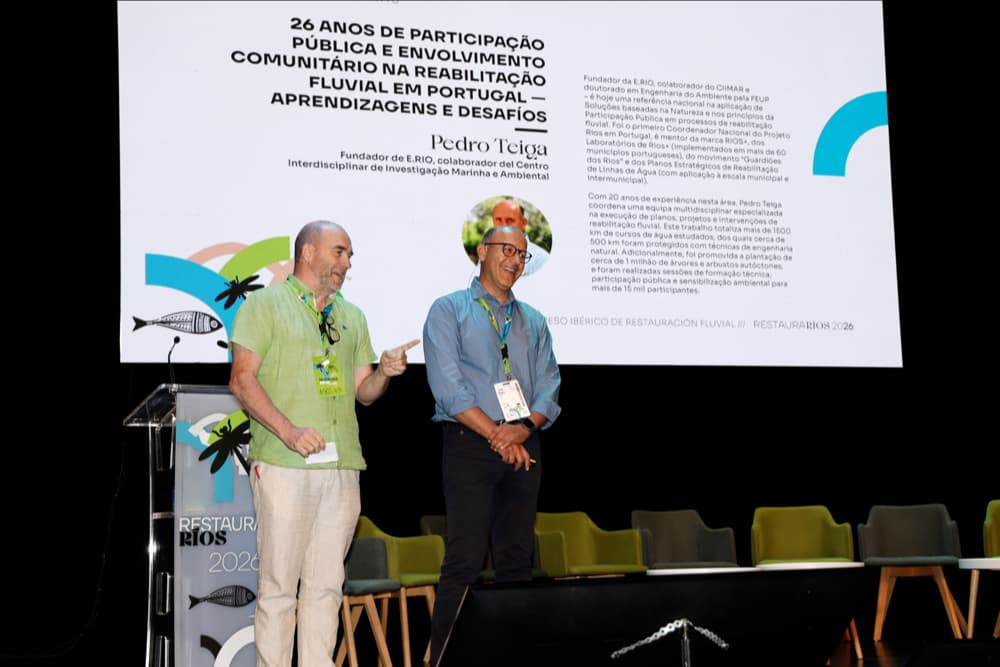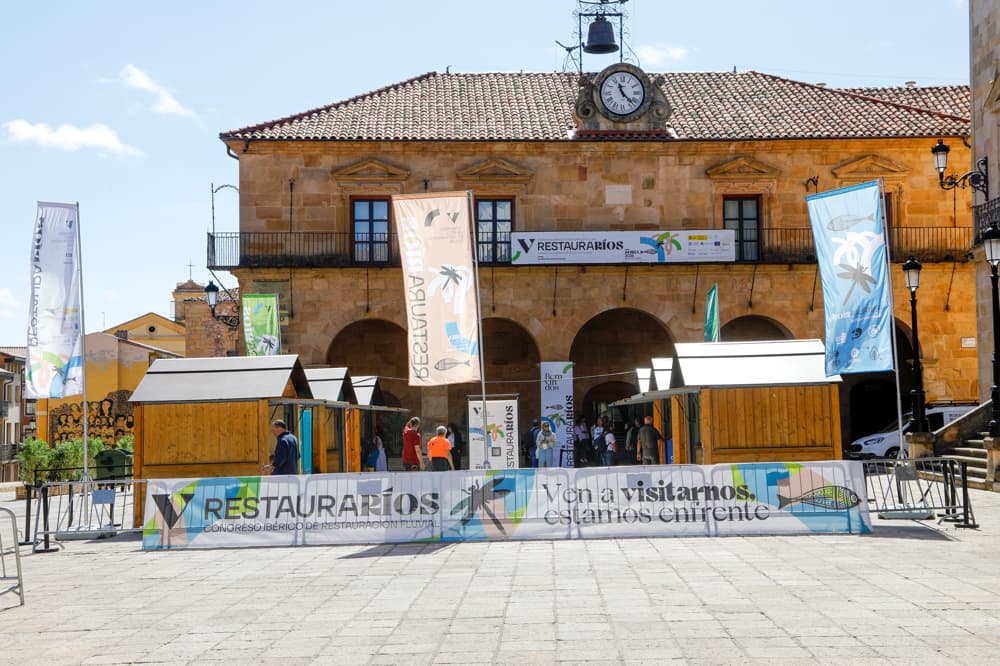
The fifth edition of the Iberian River Restoration Congress RestauraRíos leaves several conclusions on the table. The first, that the river and its floodplain are above all a space of safety, which highlights the positive nature of river ecosystems.
Likewise, it has become clear that it is more effective to preserve or recover these spaces than to have to restore them. And in any case, good planning aimed at restoring natural processes over time in the river should be prioritized, over other merely quantitative or immediate objectives.
In a context of uncertainty regarding European funds, future funding for river restoration needs to be secured. At the regulatory level, the Water Framework Directive (WFD) is the instrument that guarantees the global health of the river ecosystem, so lowering its standards is unacceptable.
Finally, the event held in Soria has shown that river restoration depends on social acceptance, so improving communication skills is essential to fight fake news.
Below, you can see the conclusions of the congress by thematic areas.

THEMATIC AREA 1: Restoration of river space, flow and solid load
- Sediment management is an essential component for the restoration of river spaces. Viable experiences have been presented to mobilize sediment and restore solid load in rivers that had lost their longitudinal continuity.
- The presentations in this thematic area emphasize that river restoration involves recovering the river processes and the space in which they operate. In this sense, the presentations point out the importance of extraordinary floods and ordinary flows to reactivate the channel, and the contribution of sediment
- The criterion of length of free rivers should not be sufficient and ecological and hydromorphological criteria must be integrated and socioeconomic criteria must be worked on as priorities.
- Opportunity criteria cannot be used exclusively as the main argument for the elimination of obstacles.
- In addition, work must be done to communicate the benefits achieved so that society understands the strategy of achieving obstacle-free rivers.
THEMATIC AREA 2: Restoration of the structure and function of river ecosystems
- New habitat simulation modules have been presented to characterize hydrological intermittency and hydro-morphological dynamics.
- New molecular techniques have been introduced to identify taxa.
- The session reflected the impact of hydraulic infrastructure, also hydroelectric, on the decline of fish fauna and solutions were proposed that highlighted the need to legislate in this regard.
- Finally, the importance of dead wood in river ecosystems and the management difficulties taking into account risk have been highlighted.
THEMATIC AREA 3: River restoration experiences through nature-based solutions
- The sessions highlight the potential of nature-based solutions (NBS) to comply with the challenges and obligations that arise from the implementation of different European Directives.
- SBNs can contribute to the improvement of degraded urban or peri-urban river environments and improve the quality of water discharged into rivers (effluents from WWTPs and/or first flush waters), favor the restoration and recovery of habitats and reduce the risk of flooding and improve resilience.
- The need for these actions to be accompanied by monitoring and maintenance programs to advance knowledge and guarantee their adoption and acceptance has become clear.
- We must avoid turning these strategies into a slogan empty of content.
THEMATIC AREA 4: Challenges of fluvial restoration in urban environments
- In urban environments, the elimination of concrete and rigid structures favors the transport of sediment to begin an incipient renaturalization and recovery of some ecological functions.
- In urban rivers, the physical and socio-cultural reality of the intervention area is key to defining the real scope of river rehabilitation initiatives.
- River education programs in urban environments are a fundamental tool to bring rivers out of «invisibility» and restore their cultural identity, so that sustainable attitudes are fostered from school to the academic community.
THEMATIC AREA 5: Governance strategies for river restoration
- River restoration must be understood as a social and institutional process that requires communication, education, participation and continuous coordination to ensure the success of a technical intervention on channels, banks or infrastructure.
- Restoring rivers is not only recovering channels or ecological connectivity: it is also reconnecting society with its rivers and building sustainable processes over time. It is therefore necessary to restore collaborative relationships: between administrations, technical teams, citizens, educational centers, local communities and the river itself.
- It is necessary to overcome territorial and institutional fragmentation: the cases presented demonstrate that treating the river as a continuous system allows basin management to be approached in an adaptive way.
- The presentations show that structured collaborations between NGOs, citizens and public administrations reduce bureaucratic obstacles and speed up the recovery of river space.
- In summary, the sessions have consolidated the idea that results-oriented governance, long-term river management and the active participation of civil society are the true pillars to achieve the ecological connectivity and resilience of our rivers.
THEMATIC AREA 6: Environmental education, participation and communication strategies for fluvial restoration
- The visibility of rivers and environmental education are drivers of transformation: for society to defend its rivers, it must first know them.
- Public participation should include training and mediation in a long-term strategy that should begin well before project implementation.
- The participation sessions allow us to identify key topics to work specifically with mediation dynamics and generate materials for different levels: environmental education, economic and political sectors. Participation spaces must integrate dialogue aimed at decision-making and awareness of different experiences as well as informative, educational and recreational exchange with the territory.
- The roots of the inevitable social conflicts around river restoration are diverse experiences, identities and invisible power relations, and not so much technical disagreements. Transformation occurs when the different parties develop shared awareness, also of their responsibilities, privileges, limits and capacity for action, as well as their individual and collective vulnerability and needs.
- Communication is the pending subject to transmit clear and rigorous messages. For restoration actions to have an impact on society, we must have professionals in communication, education and mediation specialized in river restoration and invest in training and spokespersons for the projects' technical staff.